
The short answer
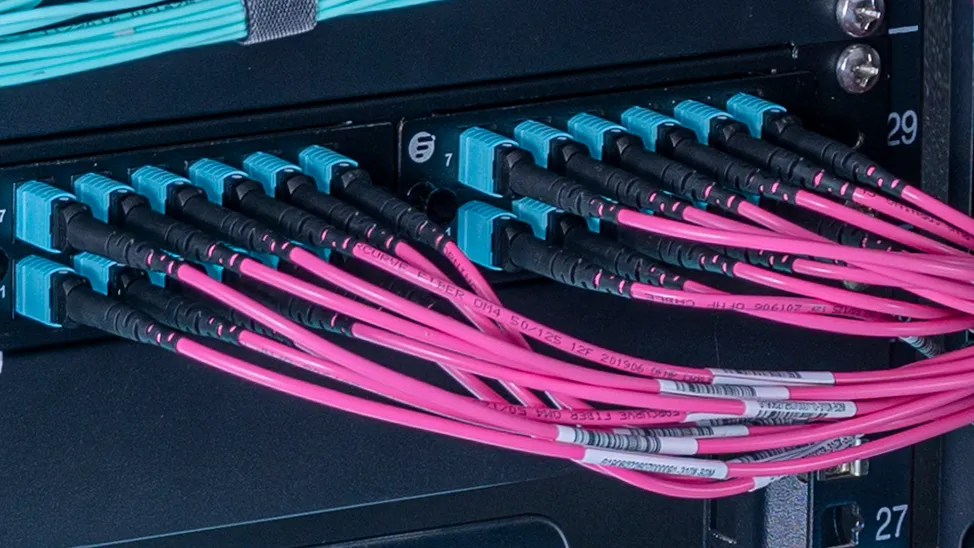
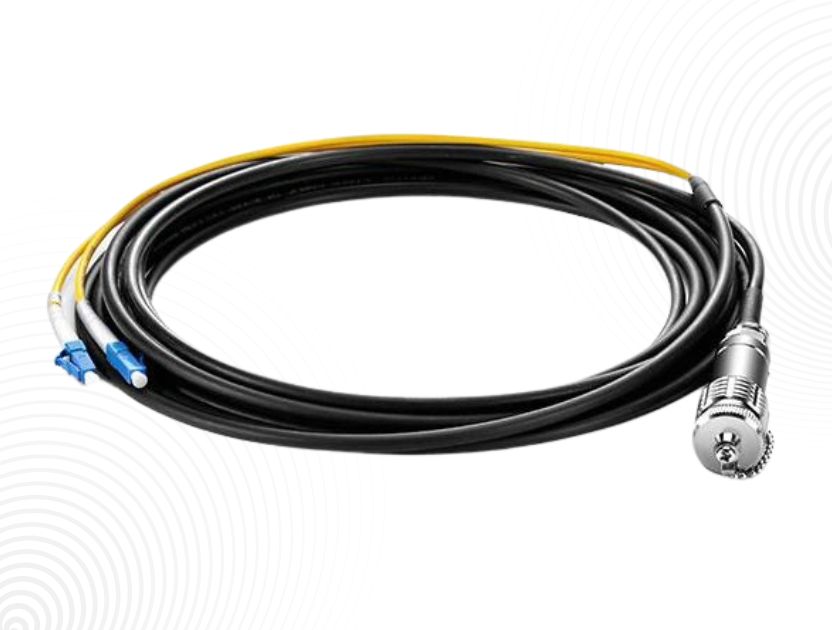
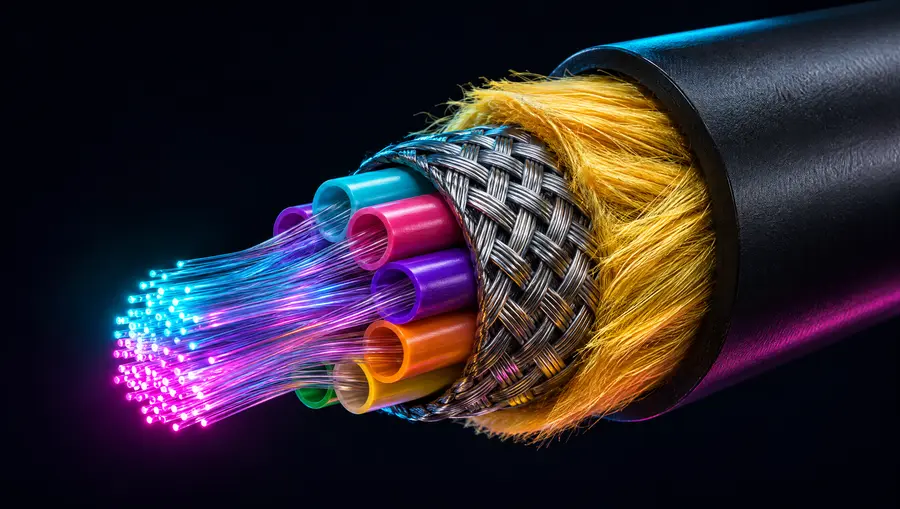
OM3 and OM4 are multimode fibers with a 50 µm core, designed for short, fast links using low-cost 850 nm optics: inside a data center, a building or a vehicle. OS2 is single-mode fiber with a 9 µm core, for long links: between buildings, across a campus, along a pipeline or into the field. OM4 is a higher-bandwidth version of OM3, so it reaches further at every speed.
How they differ
| OM3 | OM4 | OS2 | |
|---|---|---|---|
| Core / cladding | 50/125 µm | 50/125 µm | 9/125 µm |
| Light source | 850 nm VCSEL | 850 nm VCSEL | 1310 / 1550 nm laser |
| Modal bandwidth at 850 nm | 2000 MHz·km | 4700 MHz·km | Not applicable |
| Max cabled attenuation | 3.5 dB/km at 850 nm | 3.5 dB/km at 850 nm | 0.4 dB/km |
| Jacket color (TIA-598-C) | Aqua | Aqua (violet common in Europe) | Yellow |
Reach at each speed
These are the IEEE 802.3 figures to design against. Older material, including the previous Telespace site, quoted 300 m for OM3 at 40G. That is wrong: 300 m is the OM3 figure for 10G.
| Speed | OM3 | OM4 | OS2 |
|---|---|---|---|
| 1G | 550 m | 550 m | 5 km (LX) |
| 10G | 300 m | 400 m | 10 km (LR) |
| 25G | 70 m | 100 m | 10 km (LR) |
| 40G (SR4 / LR4) | 100 m | 150 m | 10 km |
| 100G (SR4 / LR4) | 70 m | 100 m | 10 km |
Notice how quickly multimode reach shrinks as speed rises. A cable plant that is comfortable at 10G today may be too long for 100G tomorrow.
A simple rule for choosing
- Longer than about 400 m, between buildings, or outdoors: OS2.
- Inside a data center or building, new installation: OM4 for multimode links; consider OS2 for the backbone.
- Extending an existing OM3 plant over short runs: OM3 to match, keeping within its reach at your target speed.
- Tactical, broadcast or field links: OS2 in almost every case, because lengths vary and cables get redeployed.
- Unsure where speeds will go: OS2. Single-mode reach barely changes from 1G to 100G.
What about OM5 and OM1?
OM5 is a wideband multimode fiber specified from 850 to 953 nm, aimed at short-wavelength multiplexing (SWDM) that runs several wavelengths down one fiber. It is compatible with OM4 at 850 nm. OM1 (62.5 µm) and OM2 are legacy fibers; avoid them for new work.
Connectors and polarity
Multimode trunks in data centers usually use MTP/MPO connectors with 8, 12 or 24 fibers, and the polarity method (A, B or C in TIA-568.3-D) must be consistent end to end. Duplex links use LC. Single-mode links may use UPC or APC polish; never mate the two. Our standards reference covers each connector family.
Ordering from Telespace
Tell us the fiber type, fiber count, connector at each end, length and, for MPO, gender and polarity. We build and test every fiber in our Mumbai workshop and ship with a test report.