
Expanded Beam Fiber Optic Connectors
Lens-coupled connectors that keep working in dirt, mud and rain.
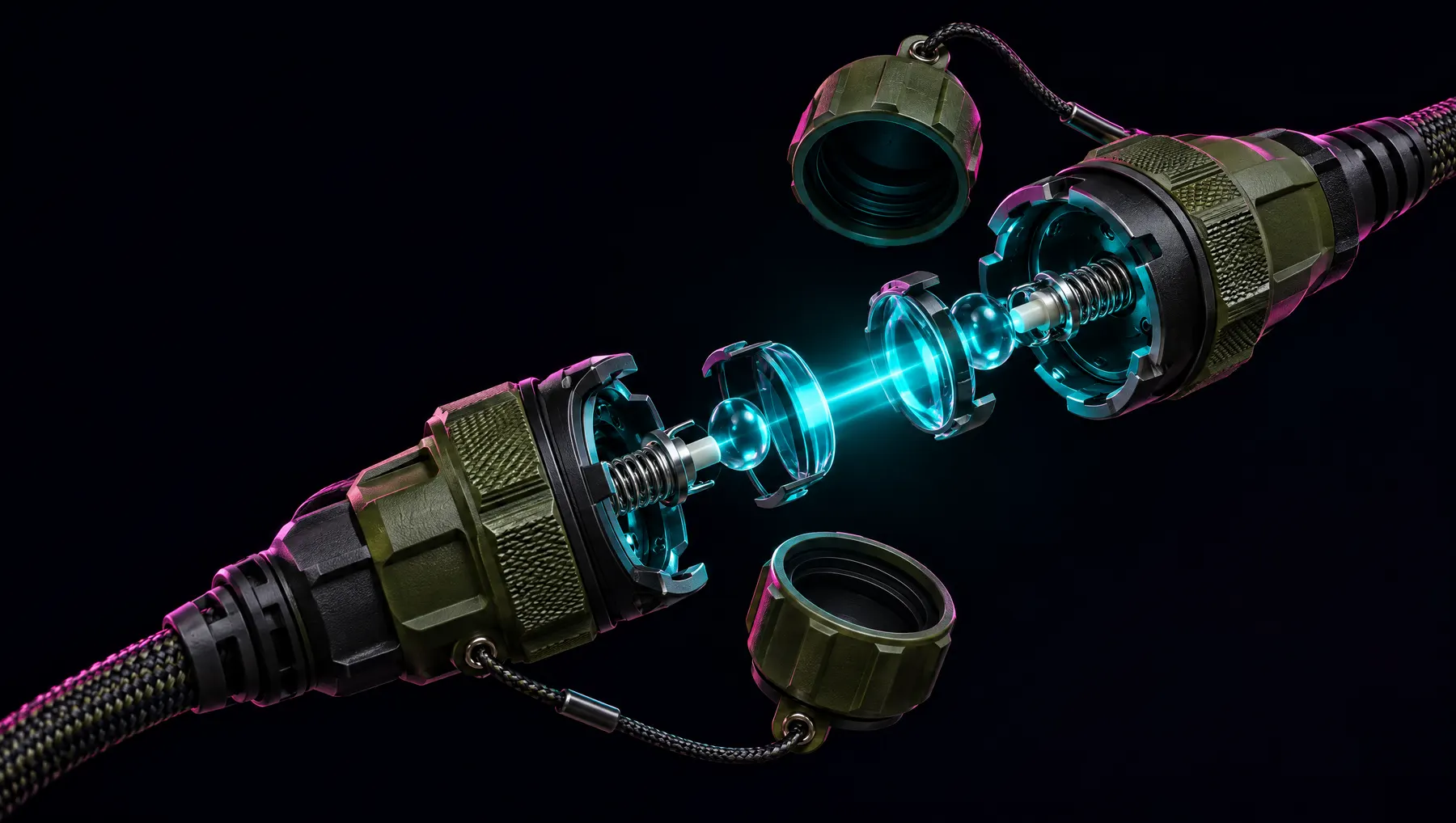
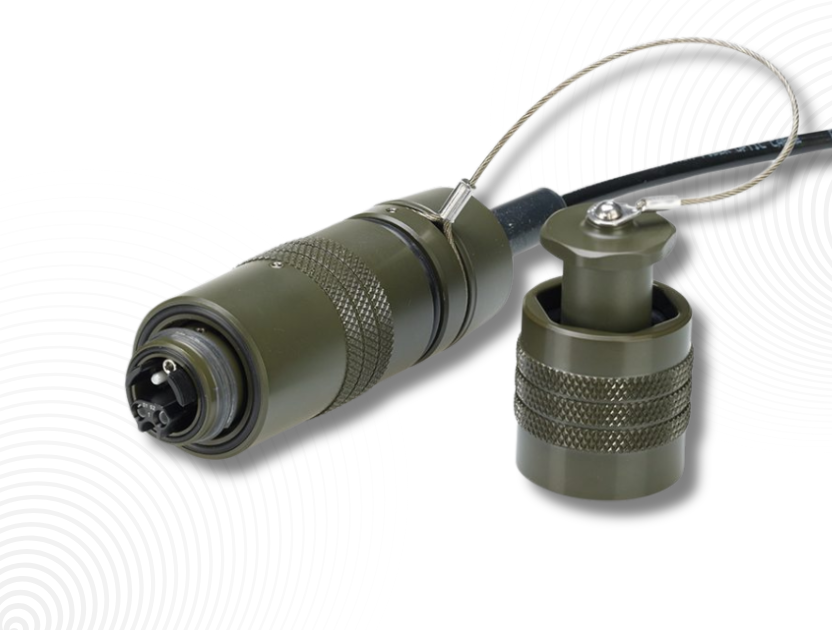
Expanded beam connectors use small lenses to widen the light beam before it crosses the mating face, so dust, mud and water have far less effect than on a physical-contact connector. Telespace terminates hermaphroditic single and multi-channel expanded beam connectors onto polyurethane tactical cable for defense, outside broadcast and field networks.
- Coupling
- Lens, non-contact
- Mating
- Hermaphroditic
- Channels
- Single or multi
- Cable
- PU tactical
- Cleaning
- Wipe in the field
- Fiber
- SM or MM
Built in Mumbai and shipped to the US by express air freight, door to door, with DAP or DDP terms on request.
What it is
An expanded beam connector couples light through a pair of lenses instead of pressing two polished fiber end-faces together. The lens in one half widens and collimates the beam; the lens in the other half focuses it back into the fiber. Because the beam crossing the mating face is much wider than the fiber core, a grain of dust or a film of water blocks only a small fraction of the light. The end-faces never touch, so they do not wear.
That makes expanded beam the standard choice for links mated in the open: military field networks, outside broadcast, offshore decks and mining sites. The connectors we supply are hermaphroditic, so any cable end joins any other, and come in single-channel, multi-channel and miniature versions.
How we build it
We terminate the connectors onto tactical cable with a polyurethane jacket and aramid strength members. Each fiber is cut, stripped, terminated into its insert, then epoxied, cured and polished, and the end-face is inspected under magnification before the lens assembly closes over it. Every channel is tested for insertion loss through a mated pair and the result is recorded against the assembly label. Caps are fitted and the cable is coiled or wound onto a reel.
Where it is used
- Military field networks, where connectors are mated in mud and darkness
- Outside broadcast camera and network runs across stadiums and tracks
- Offshore and shipboard deck connections exposed to spray
- Mining, oil and gas, and other sites where dust is constant
- Drone and portable sensor links using miniature shells
Most expanded beam orders ship as complete assemblies on tactical cable reels.
Configuring your order
Tell us:
- Channel count and fiber type (single-mode OS2 or multimode OM3, OM4)
- Shell size: standard or miniature
- Cable length and jacket; armored if it will be driven over
- Ends: expanded beam both ends, or expanded beam to LC, SC or ST breakout
- Receptacles for equipment panels, if needed
- Reel or drum, and whether you need extension cables to daisy-chain
Specifications
Technical specifications
| Coupling principle | Expanded beam: lens collimates light so fiber end-faces never touch |
|---|---|
| Fiber types | Single-mode OS2, multimode OM3 or OM4 |
| Insertion loss | Typically <= 1.0 dB per mated pair (MM), higher for SM; confirm per part |
| Gender | Hermaphroditic, any end mates with any other |
|---|---|
| Channel options | Single channel, multi-channel and miniature versions |
| Cable | Tactical fiber cable with polyurethane jacket, built to the MIL-PRF-85045 cable family on request |
|---|
| Ingress | Sealed when mated or capped; typically IP68 rated, confirm per connector |
|---|
| Mating cycles | Rated for repeated field mating; cycle count per connector datasheet |
|---|
Values are typical. Every assembly is built to order, so final figures are confirmed on your quote and test report.
Configure
Build it to your link
- 01
Single channel
One or two fibers for simple point-to-point field links.
- 02
Multi-channel
Several fibers in one shell for camera, network and sensor trunks.
- 03
Hermaphroditic
Genderless ends, so any cable joins any other and reels daisy-chain.
- 04
Miniature
Compact shells for drones, portable equipment and tight spaces.
What you get
- Lens coupling keeps fiber end-faces out of contact, so dirt has far less effect
- Hermaphroditic ends: no plug and socket to match on the ground
- Cleaned in the field with a wipe or water rinse rather than a microscope kit
- Single, multi-channel and miniature versions
- Terminated on crush-resistant polyurethane tactical cable
- Every channel tested for insertion loss before dispatch
Applications
Where it is used
- Military field networks and command posts
- Outside broadcast camera and network runs
- Offshore and shipboard deck connections
- Mining, oil and gas and other dirty sites
- Drone and portable sensor links
Industries served
Standards
FAQ
Questions buyers ask
How does an expanded beam connector work?
A small lens in each half widens and collimates the light from the fiber, so the beam crossing the mating face is many times wider than the fiber core. A speck of dust then blocks only a tiny fraction of the light, and the fiber end-faces never touch.
Expanded beam or physical contact: which should I choose?
Choose expanded beam when connectors are mated in dirt, mud or rain, by crews who cannot inspect end-faces. Physical-contact connectors such as LC or MIL termini have lower loss and suit clean, fixed installations.
What does hermaphroditic mean?
Both halves are identical, so any cable end mates with any other. Reels and extension cables can be joined in any order without adapters.
How do I clean an expanded beam connector?
Wipe the lens face with a lint-free cloth or rinse it with clean water and let it dry. Because the beam is wide, field cleaning is usually enough to restore performance.
Do expanded beam connectors have higher loss?
Yes, typically somewhat higher than a clean physical-contact connector, because of the lens pair. In exchange the loss stays stable through contamination and many mating cycles.
Related products
All rugged connectors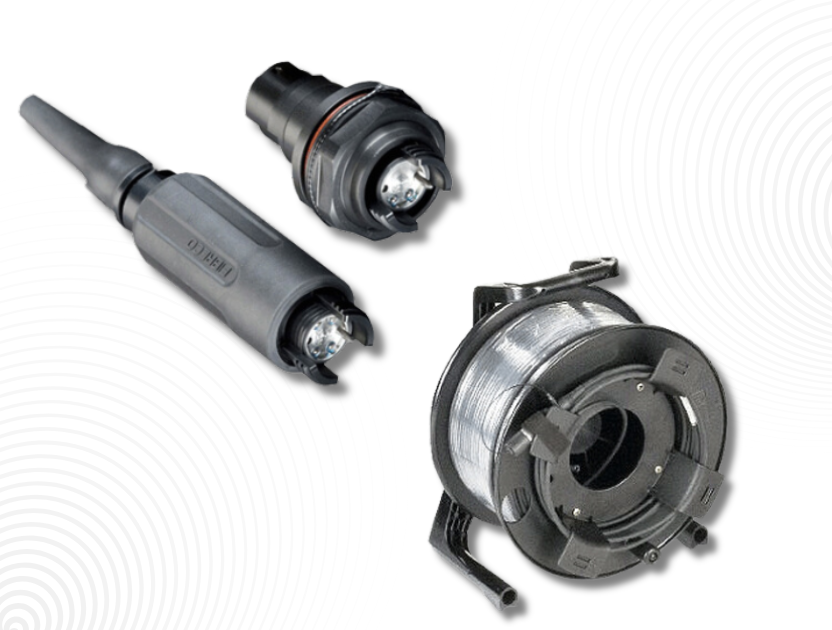 Fiber
Tactical Expanded-Beam Fiber Cable Assemblies
Field cable that mates end to end, in mud, rain and dust.
- ConnectorExpanded beam, hermaphroditic
- ContactNon-contact lens interface
- JacketPolyurethane
 Fiber
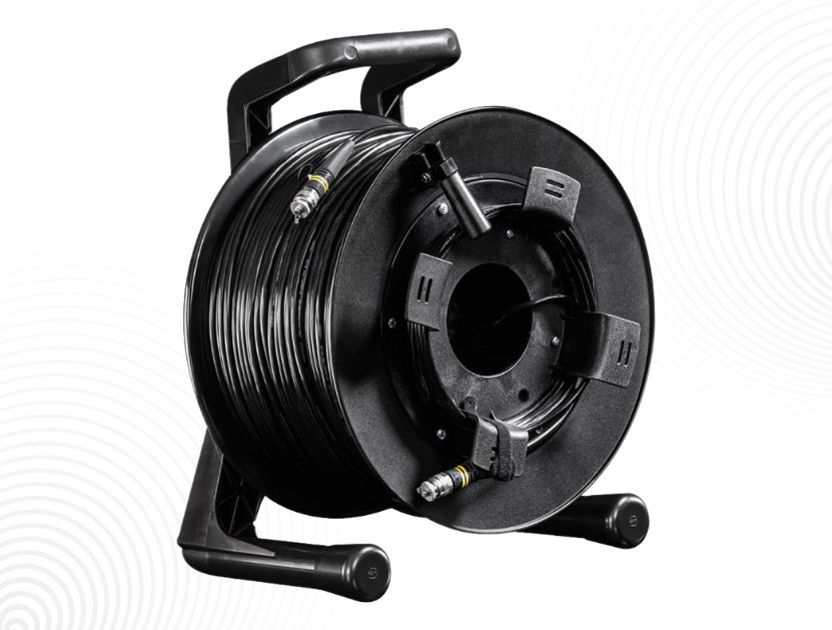
Tactical Fiber Optic Cable Reels
Fiber that pays out in minutes and winds back for the next job.
- Length100 m standard
- FiberSingle-mode
- SealingIP67 cap, plug, receptacle
 Fiber
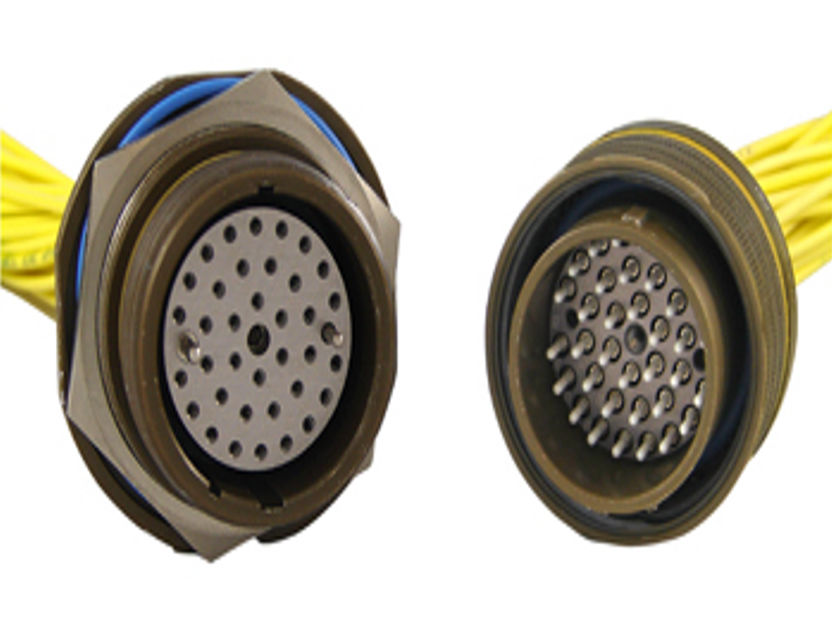
MIL Circular Fiber Optic Connector
Multi-channel circular fiber connectors for vehicles, ships and airframes.
- StyleMIL-DTL-38999 type
- TerminiGenderless
- Ferrule1.25 mm ceramic
 Fiber
MIL-Aero Fiber Optic Cable Assemblies
Rugged fiber assemblies for airframes, vehicles, ships and field systems.
- FiberSM or MM
- Connectors38999, TFOCA-style, LC, SC, ST, FC
- JacketPU, LSZH or fluoropolymer
Request a quote
Quote for Expanded Beam Fiber Optic Connectors
Send the length, connectors each end and quantity, or attach a drawing. An engineer replies within one business day with options and a price.
Built in Mumbai and shipped to the US by express air freight, door to door, with DAP or DDP terms on request.