

Engineering notes for offshore and marine
The environment
Offshore platforms, vessels, ports and coastal sites combine nearly every threat a fiber link can face. Salt spray settles on every surface and corrodes metal. Water arrives as rain, spray, washdown and occasional immersion. Deck cables bake in tropical sun and cool quickly at night, and the whole structure vibrates with machinery, wind and sea state. Many sites are classified hazardous areas with their own rules on equipment.
Access is the hidden cost. A link that fails on a platform or a ship at sea may wait days for a technician, so the extra cost of a better connector or a spare leg is small against one call-out.
What fails
Corrosion is the slow killer: coupling nuts seize, shell plating blisters and grounding paths fail. Water ingress follows, usually at a connector that was left uncapped, a damaged boot or a gland that was never designed for submersion. Contamination at physical-contact interfaces is common because cleaning conditions on deck are poor. Mechanical damage happens where cables cross walkways, pass through cable trays with sharp edges or are pulled through glands.
What to specify
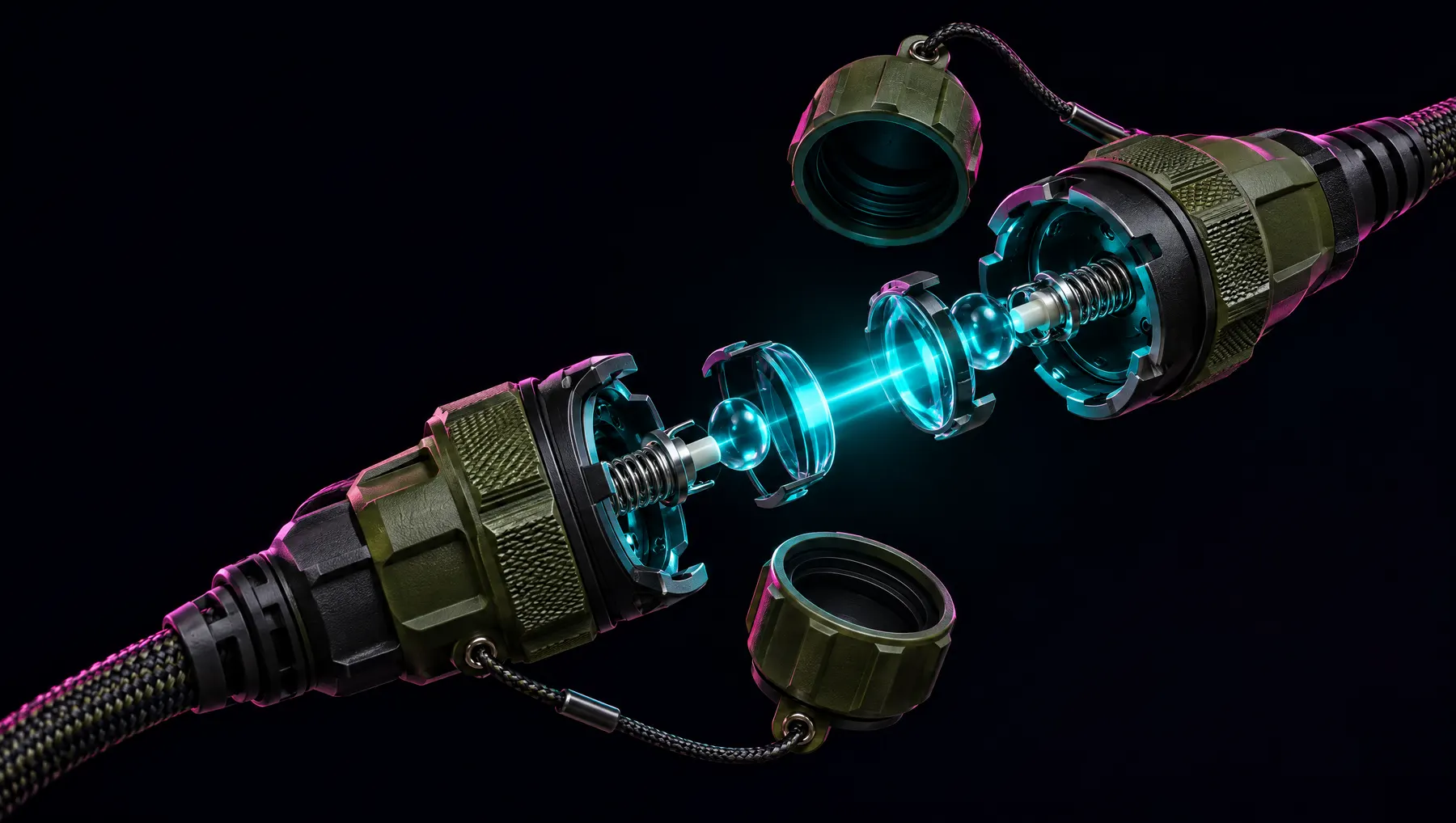
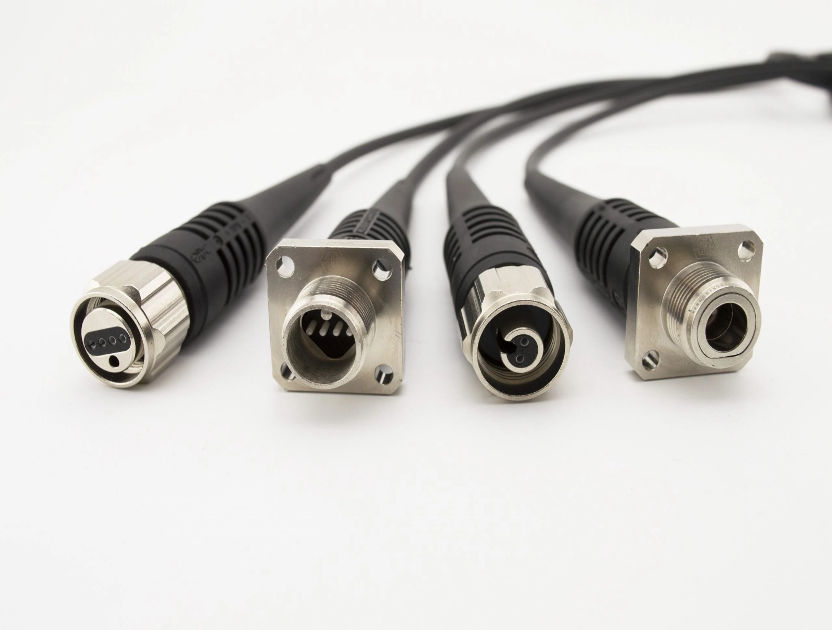
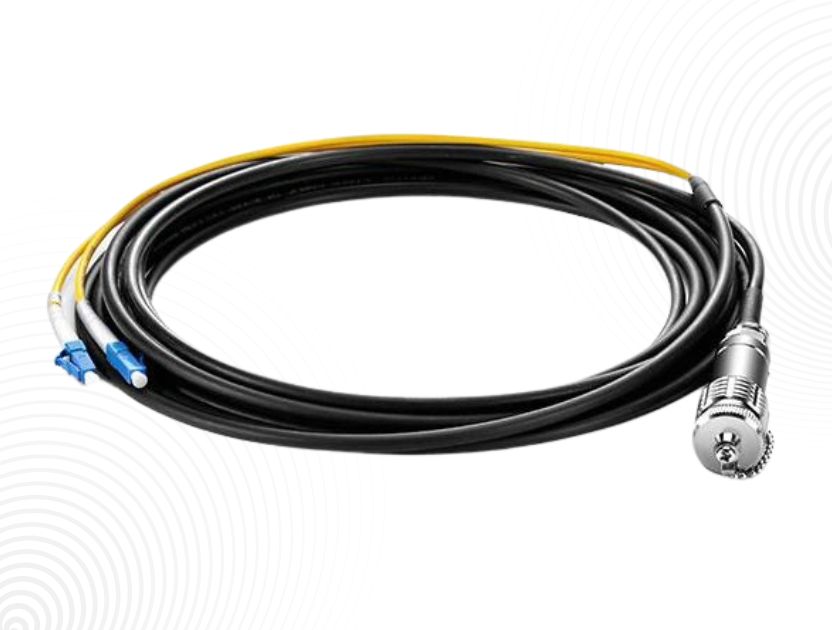
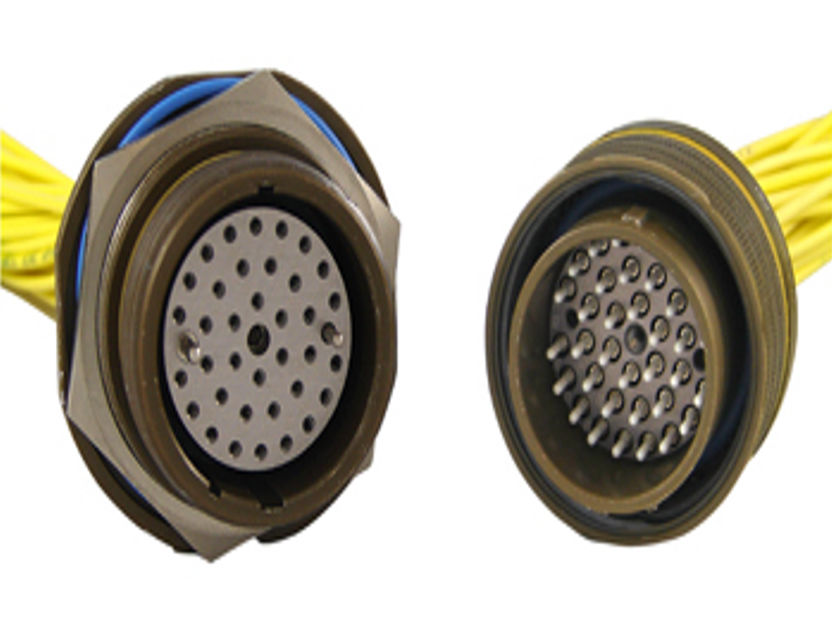
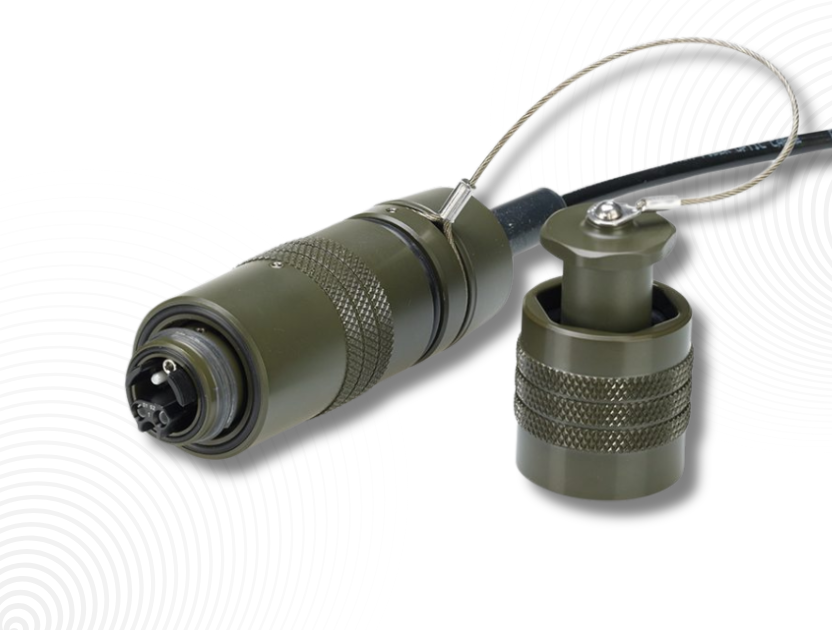
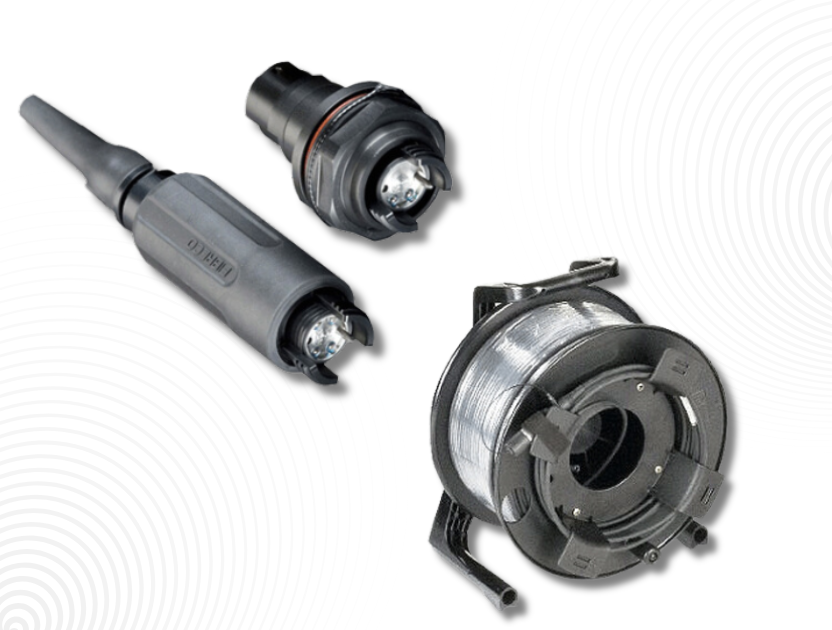
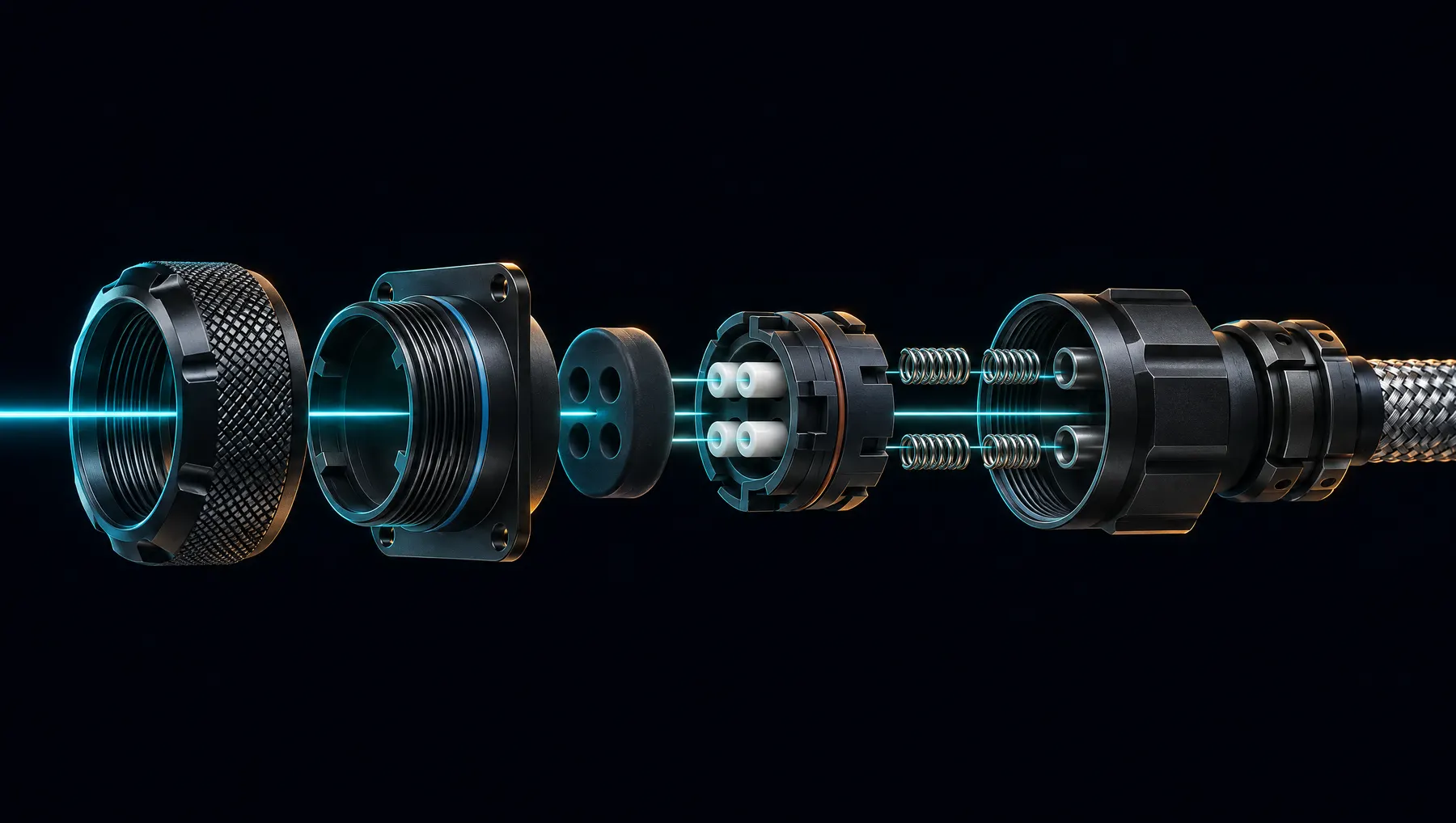
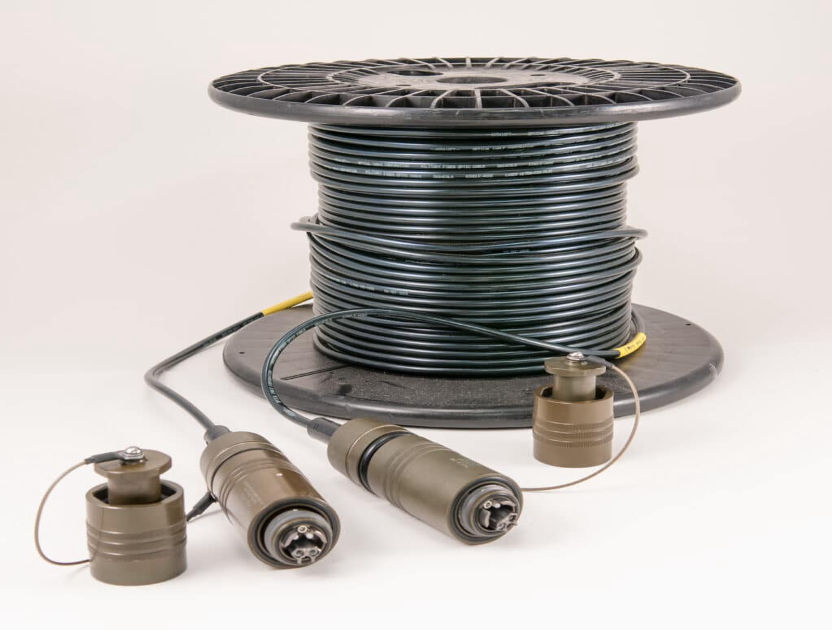
- Connector: expanded beam where connectors are mated outdoors or in wet spaces; MIL-style circular connectors from 2 to 48 channels for sealed equipment interfaces; ODC-style field connectors for compact 2 and 4 channel links.
- Sealing: the IP rating mated and unmated, and for IP68 the stated depth and duration.
- Materials: shell plating or material suited to salt spray, and a jacket that is UV-stable, flexible at low temperature and, where required, low smoke zero halogen for enclosed spaces.
- Cable: armored construction where crush or rodents are a risk, single-mode OS2 for anything beyond short runs, fiber count with spares.
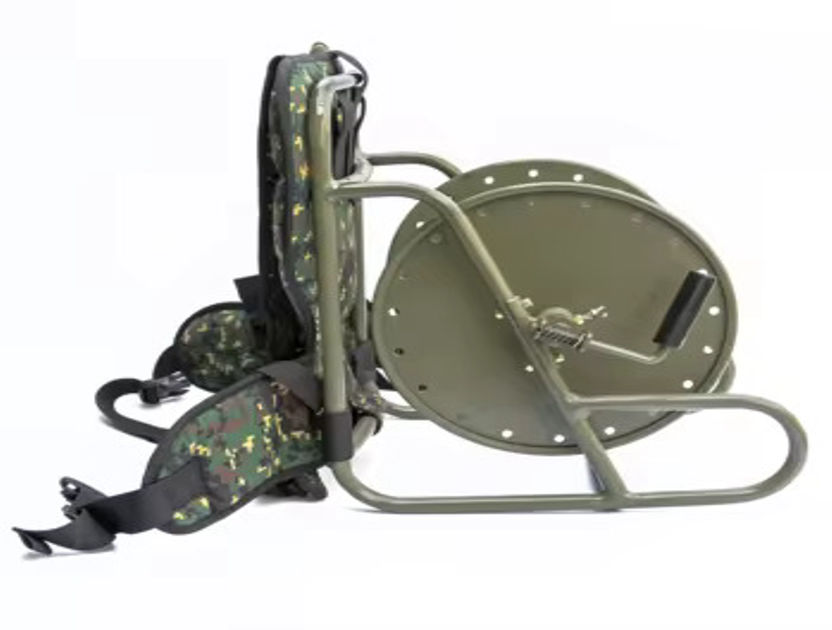
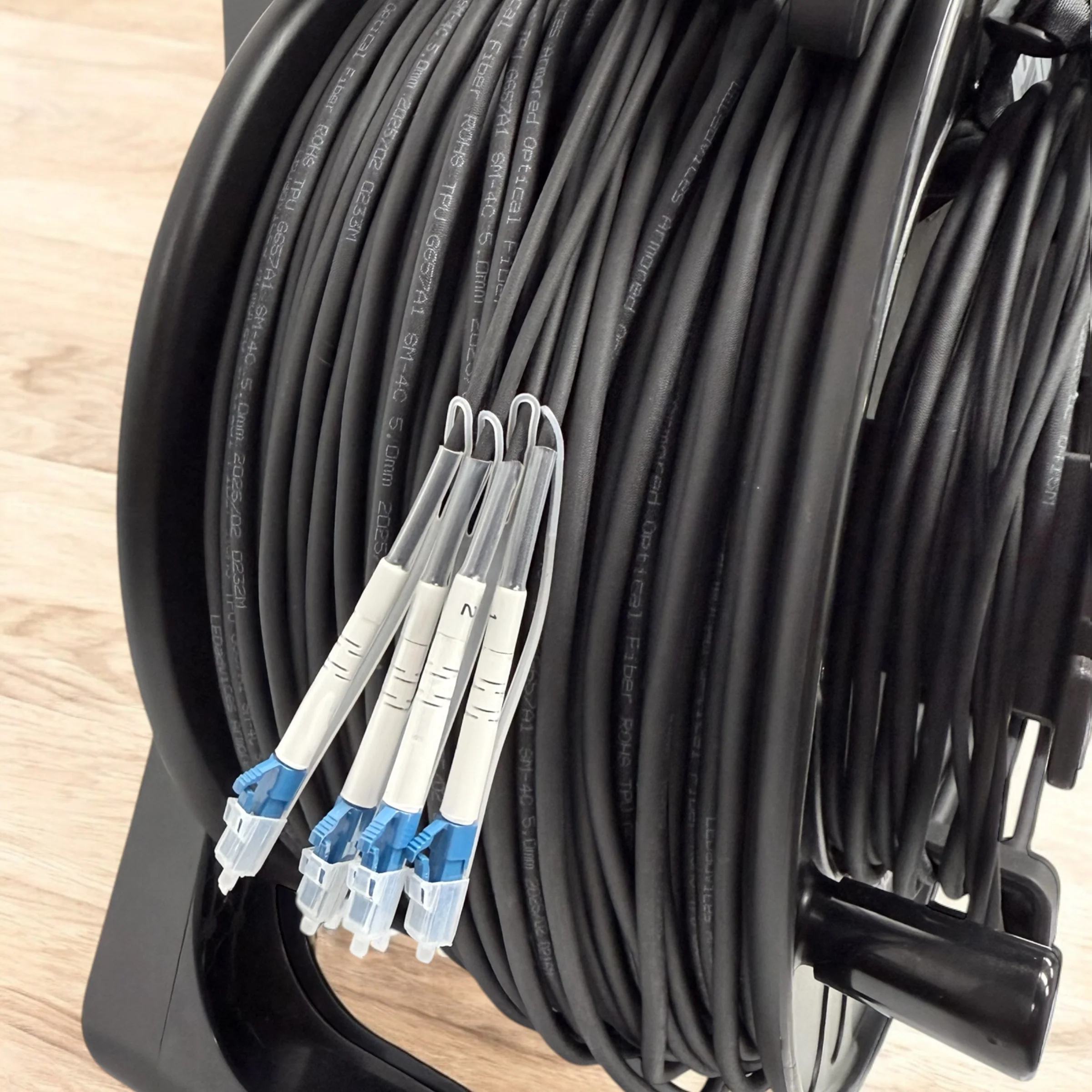
- Deployment: drum reels for temporary or recoverable cables, panel receptacles for fixed ends, and protective caps with lanyards on every connector.
- Testing: insertion loss per channel at the stated wavelengths, with results supplied with the assembly.
Standards that matter
IEC 60529 defines IP67 and IP68 sealing. MIL-DTL-38999 is the reference circular connector family that many marine connectors follow. Expanded-beam connectors are described in our expanded beam vs physical contact guide. LSZH jacket performance is covered by IEC 60332 (flame) and IEC 61034 (smoke). Offshore and marine projects often add class society or site-specific requirements: list them on your request and we will tell you plainly what we can and cannot meet.
From drawing to drum
Telespace builds offshore assemblies in its Mumbai workshop: cable cut and prepared, connectors terminated and sealed, every channel inspected and tested before the assembly is wound onto its drum. When the job needs a non-standard connector arrangement or a hybrid fiber and copper build, custom engineering is the place to start.