Two ways to move light across a joint
Every fiber connector has one job: get light out of one fiber and into the next with as little loss as possible. There are two ways to do it.
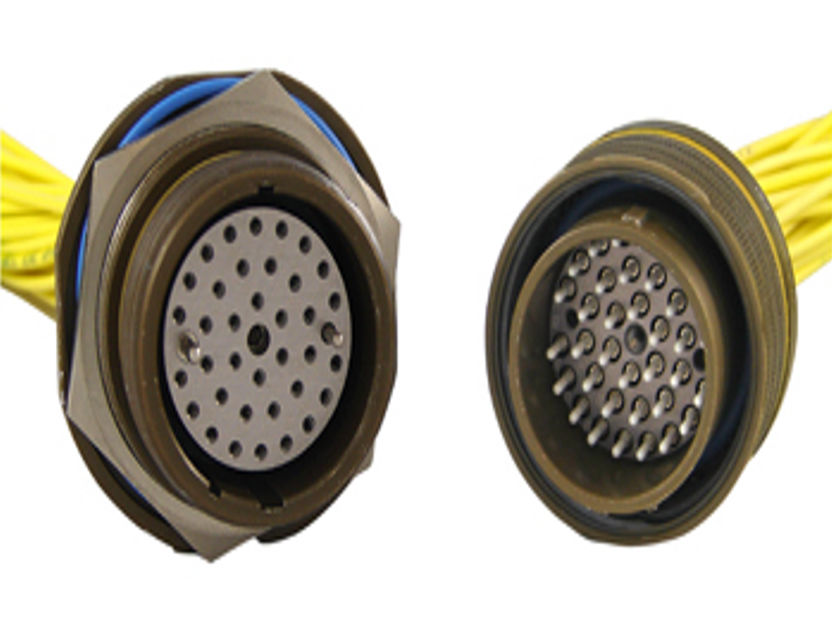
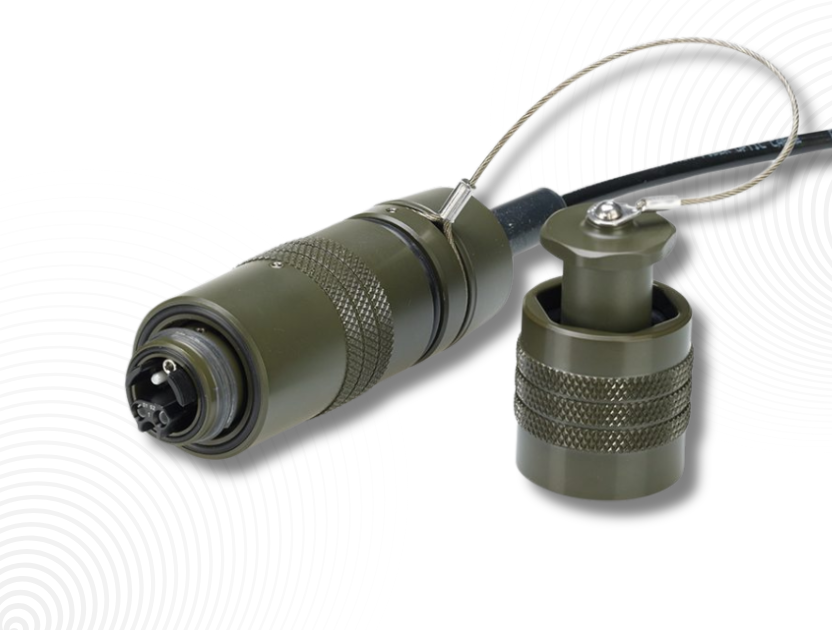
A physical-contact connector holds each fiber in a precision ferrule and presses the two polished end-faces together under spring force. With clean, well-polished faces, almost all the light crosses. LC, SC, ST, FC, MPO and most MIL termini work this way.
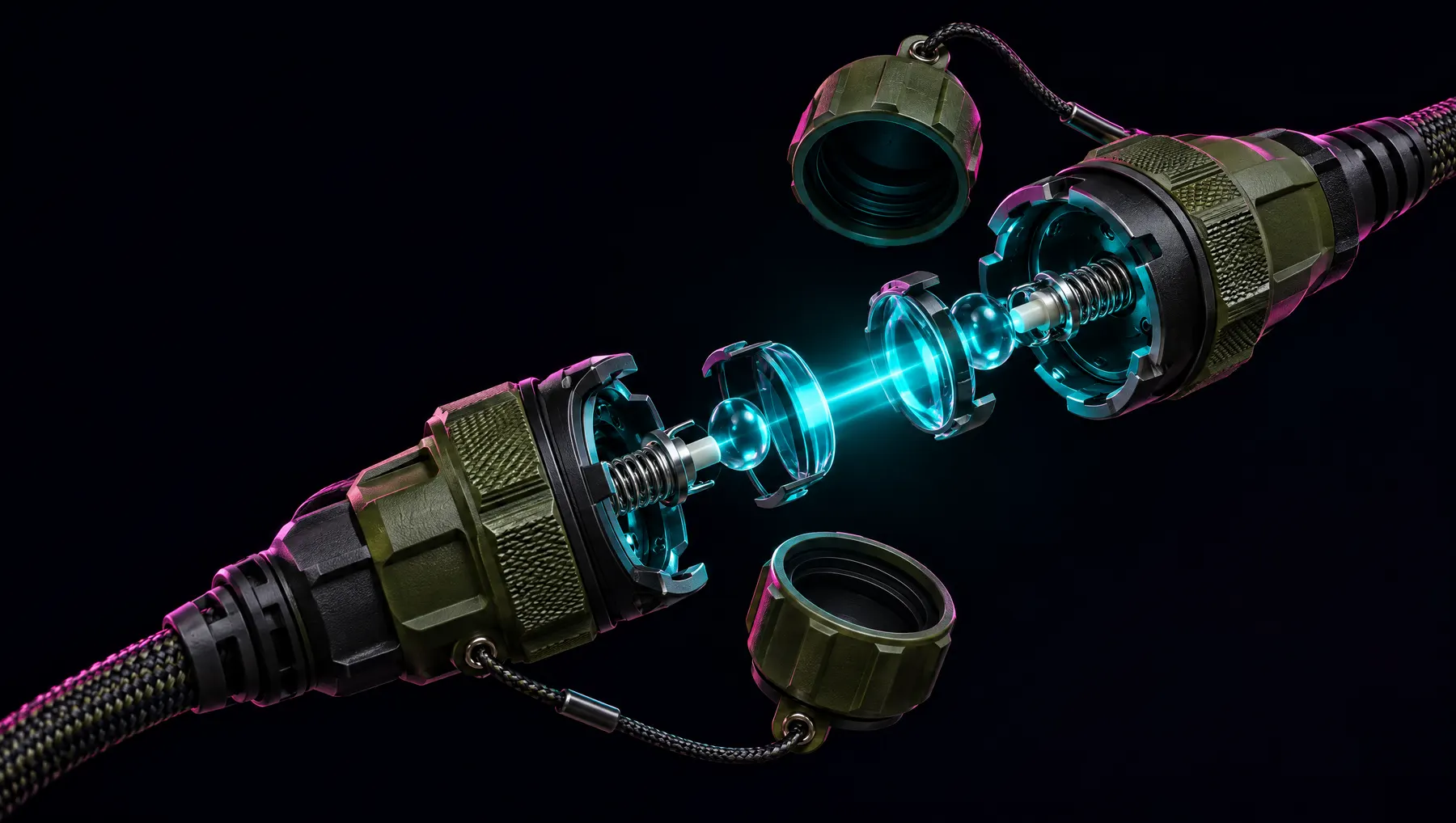
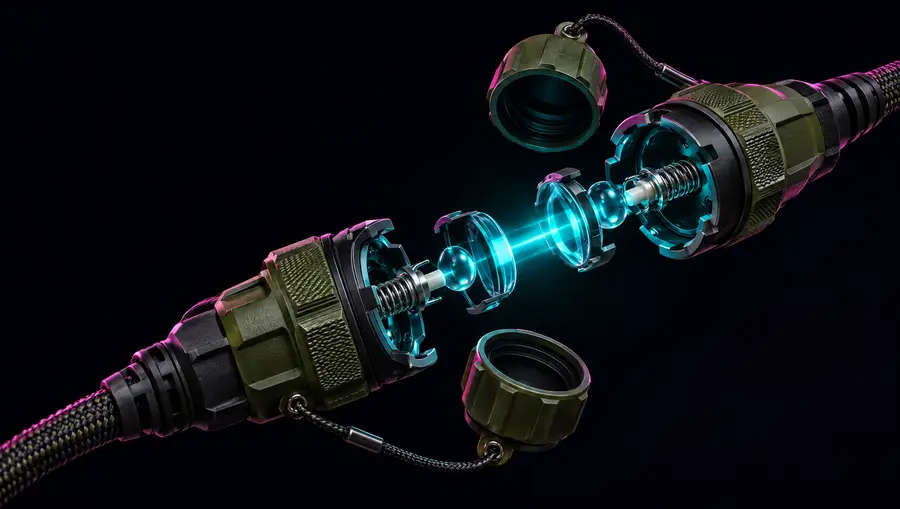
An expanded-beam connector puts a lens in front of each fiber. The lens expands the light from the tiny core into a collimated beam many times wider, it crosses a small air gap, and the lens in the mating half focuses it back into the fiber. The two halves never touch optically.
Why the difference matters
A single-mode core is 9 µm across. A grain of dust of similar size, sitting on a physical-contact end-face, can block most of the light and, when the connector is mated, scratch both faces. On an expanded beam around a millimetre wide, the same grain blocks only a small fraction of the light, and because the lenses do not touch, nothing gets scratched.
How they compare
| Physical contact | Expanded beam | |
|---|---|---|
| Typical loss per mated pair | About 0.2 to 0.5 dB | About 0.5 to 1.5 dB |
| Return loss | High with UPC or APC polish | Good; depends on lens design |
| Tolerance of dust and mud | Low | High |
| Field cleaning | Cleaning tools and an inspection scope | Lint-free wipe, often a water rinse |
| Mating life | Hundreds to low thousands of cycles | Thousands of cycles |
| Size and cost | Smaller, lower cost | Larger, higher cost |
When to choose expanded beam
- Field-deployed tactical cables that are mated in dirt, sand or rain.
- Offshore, marine and mining sites where salt, mud and water are constant.
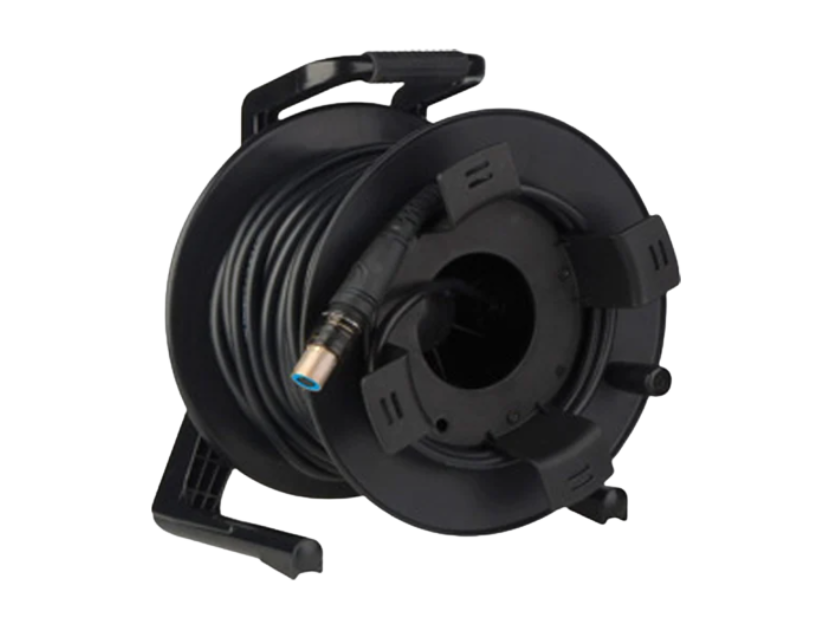
- Outside broadcast and touring, where connectors are mated daily by crews in a hurry.
- Any link where an inspection scope and cleaning kit will not be on hand.
When to choose physical contact
- Fixed installations in clean spaces: racks, buildings, equipment interiors.
- Links with tight loss budgets, such as long single-mode runs with many connections.
- Dense panels where connector size matters.
- Systems sensitive to back-reflection, where APC polish is needed.
The loss budget question
Expanded beam adds loss per mated pair. On a field link with two or three connections that is usually easy to absorb; on a long single-mode link with many joints it can matter. Add up the fiber attenuation, connector losses and splices, and compare with the power budget of your transceivers or converters before choosing. Our standards reference has the figures.
Standards
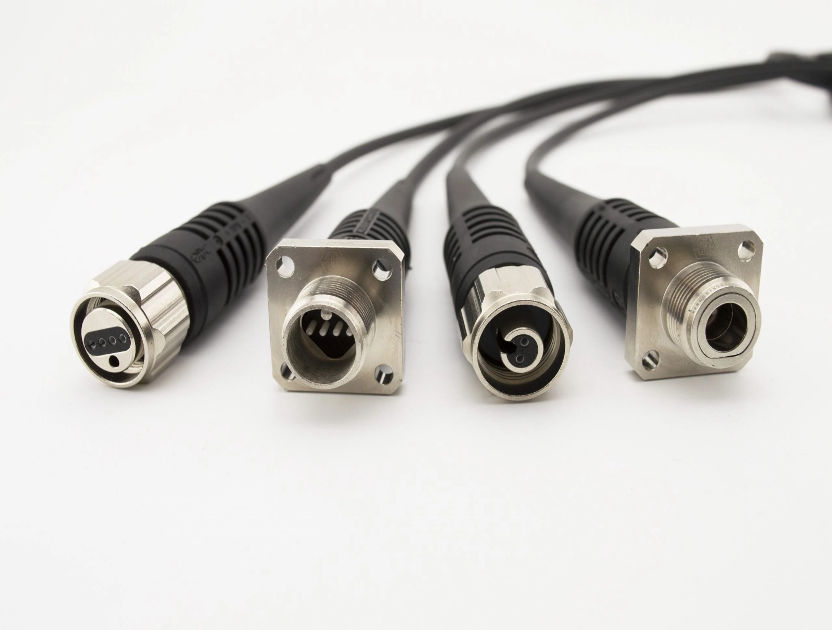
MIL-PRF-64266 is the US military specification for expanded-beam circular connectors. Physical-contact military connectors include MIL-DTL-38999 with MIL-PRF-29504 termini and the hermaphroditic MIL-DTL-83526 family. Many commercial connectors of both kinds exist outside these specifications.
Talk to us
Telespace supplies and terminates expanded-beam and physical-contact connectors on tactical, armored and broadcast cables, built and tested in Mumbai. If you are unsure which suits your deployment, describe where and how often the connector will be mated and we will recommend one.