What a MIL-aero assembly is
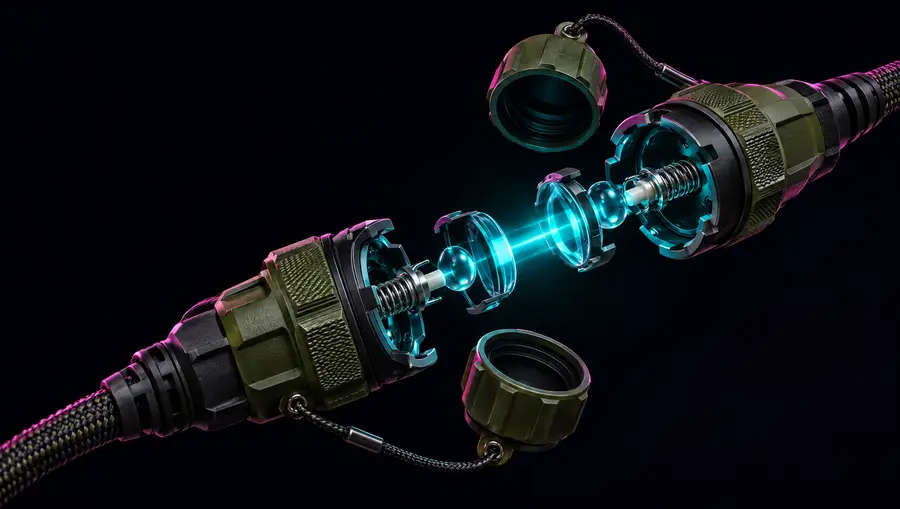
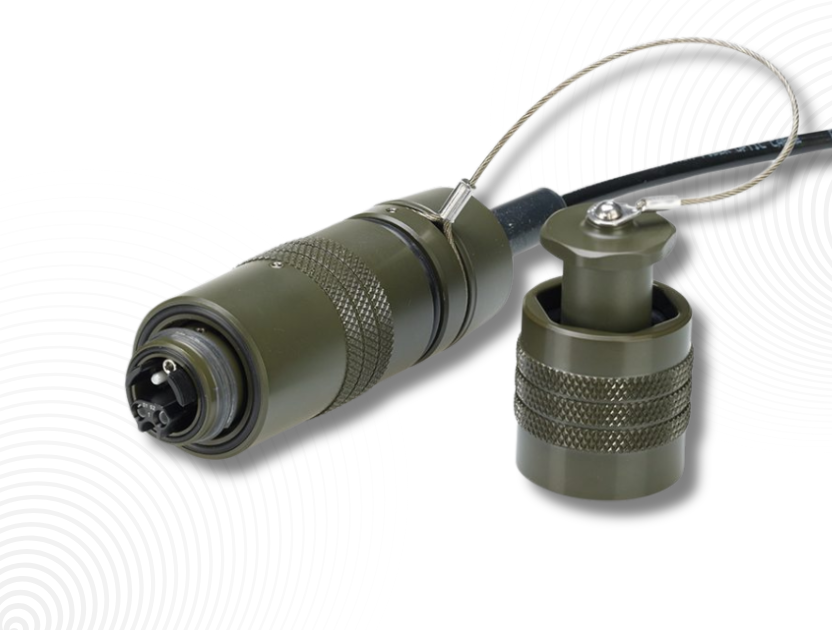
A MIL-aero fiber optic cable assembly is a complete, ready-to-install link: rugged fiber cable with military-style connectors fitted, polished and tested at both ends. You plug it in; nobody terminates fiber in the field. The connector protects the fiber joint with a positive, vibration-resistant coupling, and the cable protects the glass from crush, bending, temperature and fluids.
Why fiber replaced copper
Defense platforms moved to fiber for practical reasons. Fiber is lighter than copper for the same capacity, which matters on aircraft and for soldiers carrying cable. It carries far more bandwidth over longer distances without repeaters. It is immune to electromagnetic interference, lightning and the noise from radar, radios and engines. It does not radiate the signal it carries, so it is harder to intercept than copper. And it gives complete electrical isolation between pieces of equipment, removing ground loops.
The checklist
1. Fiber type and count
Single-mode OS2 for longer links and future speed upgrades; multimode OM3 or OM4 when the equipment uses 850 nm optics over short distances. Add spare fibers; they cost little at build time and a lot later.
2. Connector family
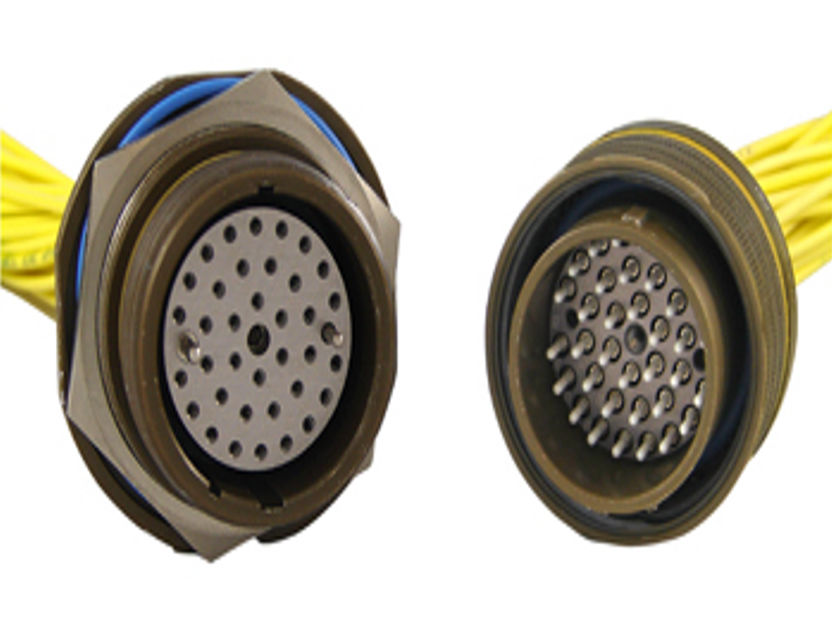
- MIL-DTL-38999-style circular with MIL-PRF-29504 termini for equipment and bulkhead interfaces.
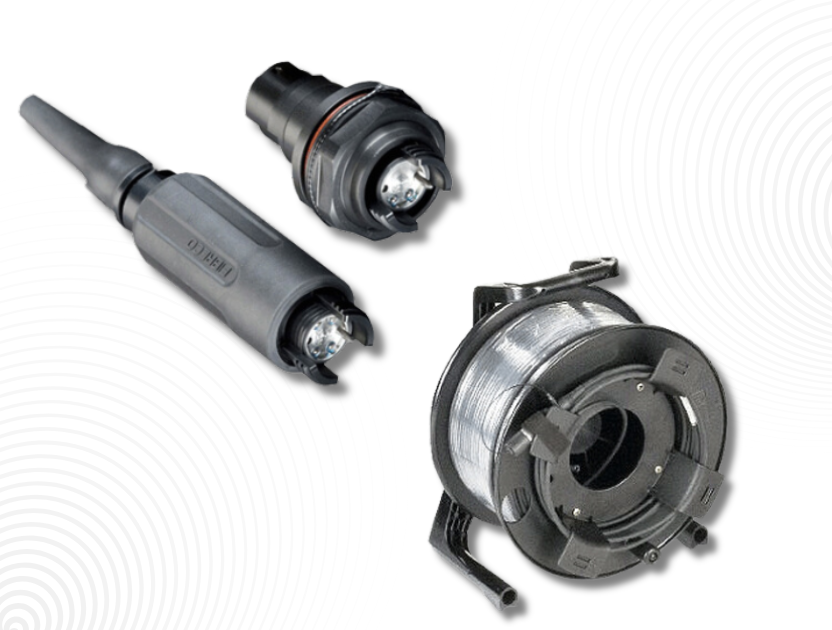
- Hermaphroditic MIL-DTL-83526 (TFOCA-II style) for field cables that are joined end to end.
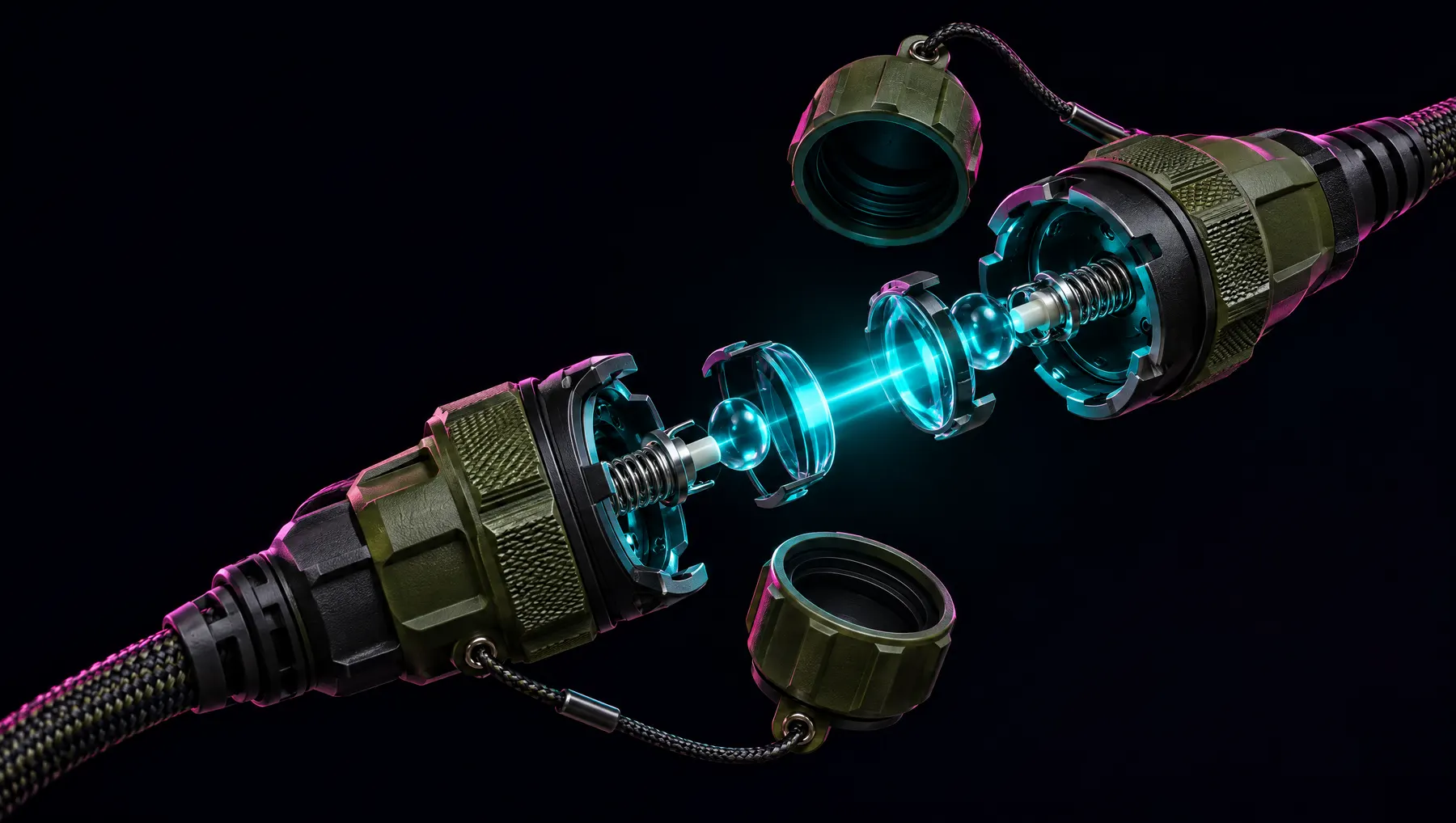
- Expanded beam where connectors are mated in dust, mud or water.
- LC, SC, ST or FC inside equipment or at a breakout.
State whether qualified (QPL-listed) parts are required or intermateable equivalents are acceptable. Our standards reference explains the difference.
3. Cable construction
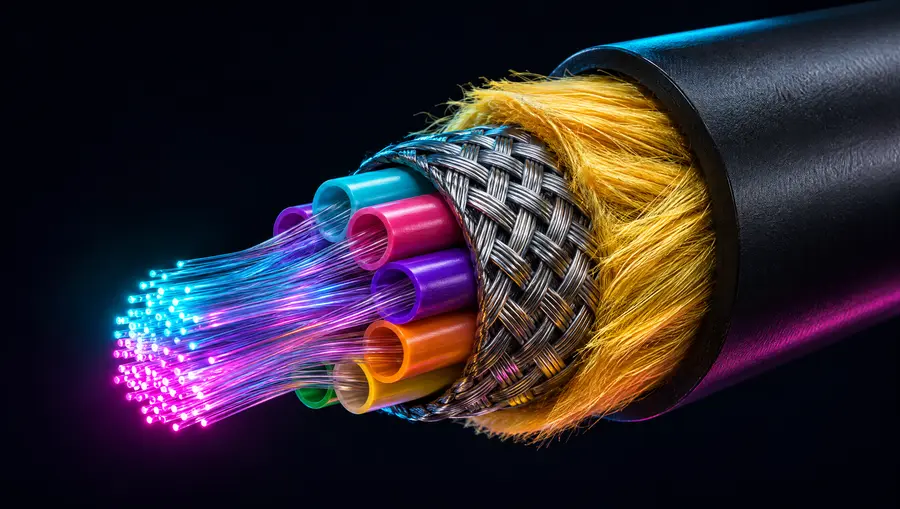
Tight-buffered or breakout cable, aramid strength members, jacket material (polyurethane for flexibility and abrasion, fluoropolymer for temperature and fluids, LSZH for enclosed spaces), and armor if crush or rodents are a risk. Give the minimum bend radius your route allows.
4. Environment
Operating and storage temperature, fluids the assembly will meet, IP rating mated and unmated, vibration and shock. Remember that in a finished assembly the cable jacket and epoxy often limit temperature, not the connector shell.
5. Testing and documentation
Insertion loss per channel at agreed wavelengths with a stated pass limit, end-face inspection, serial numbers and a test report shipped with each assembly. Agree the format before the order, not after.
6. Packaging and deployment
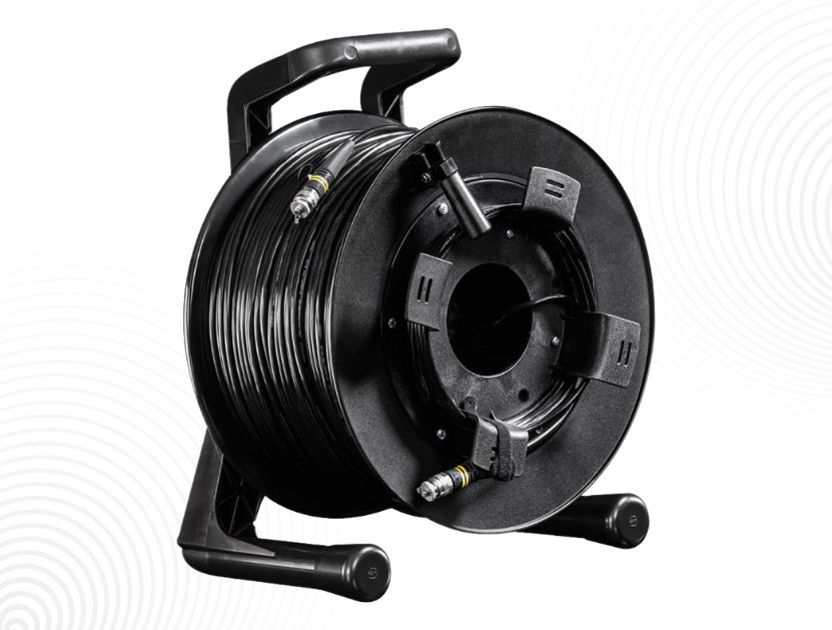
Reels or drums for field cables, dust caps with lanyards, labels at both ends, and protective packaging for transport.
Common mistakes
Ordering by a connector name alone, without the shell size and insert arrangement. Forgetting that the mating equipment decides plug versus receptacle. Assuming an IP rating applies with the cap off. Skipping spares. Not asking for a test report until the cables arrive.
How Telespace builds them
We build MIL-aero and tactical fiber assemblies in our Mumbai workshop: cable prepared, connectors terminated and polished, every channel inspected and tested for insertion loss before dispatch. Send a drawing, a sample or a description of the job, and see our guide on how to specify a tactical fiber cable for field-deployable links.