
What the cable does
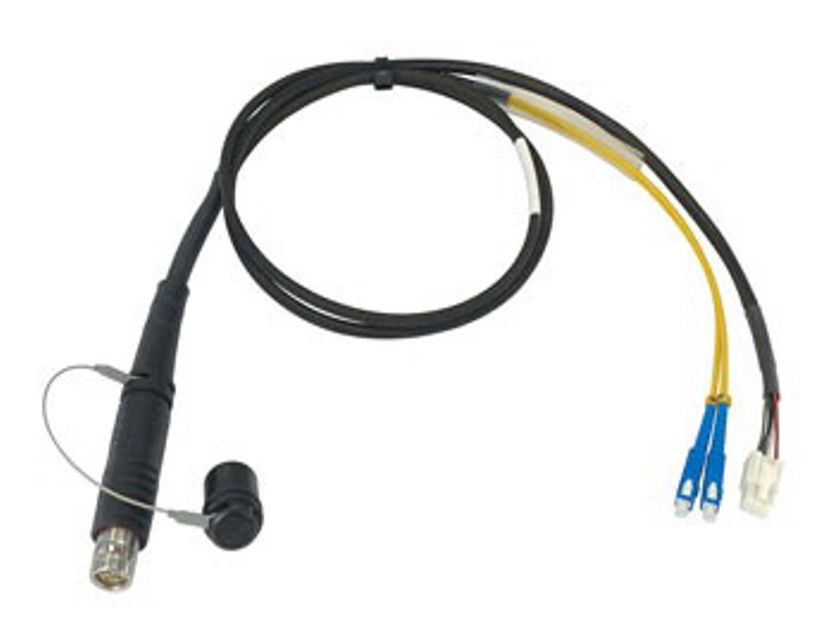
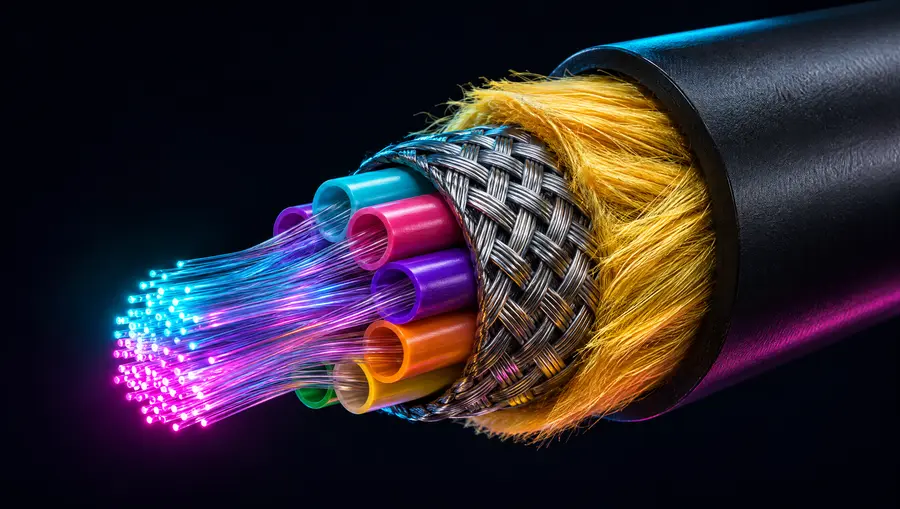
A studio or OB camera needs three things from the control room: a path for its signals, power to run, and control. SMPTE 311M combines them in one cable. It links the camera head to its camera control unit (CCU) or base station and carries, in both directions, the video, return feeds, audio, intercom, tally and remote control data, while the copper conductors power the camera.
What is inside
- Two single-mode fibers for all signals, one in each direction.
- Two power conductors, the heavier copper pair, to supply the camera.
- Two control conductors, a lighter pair for low-voltage functions.
- Strength members and an overall jacket, often polyurethane for outside broadcast.
The SMPTE 304M connector
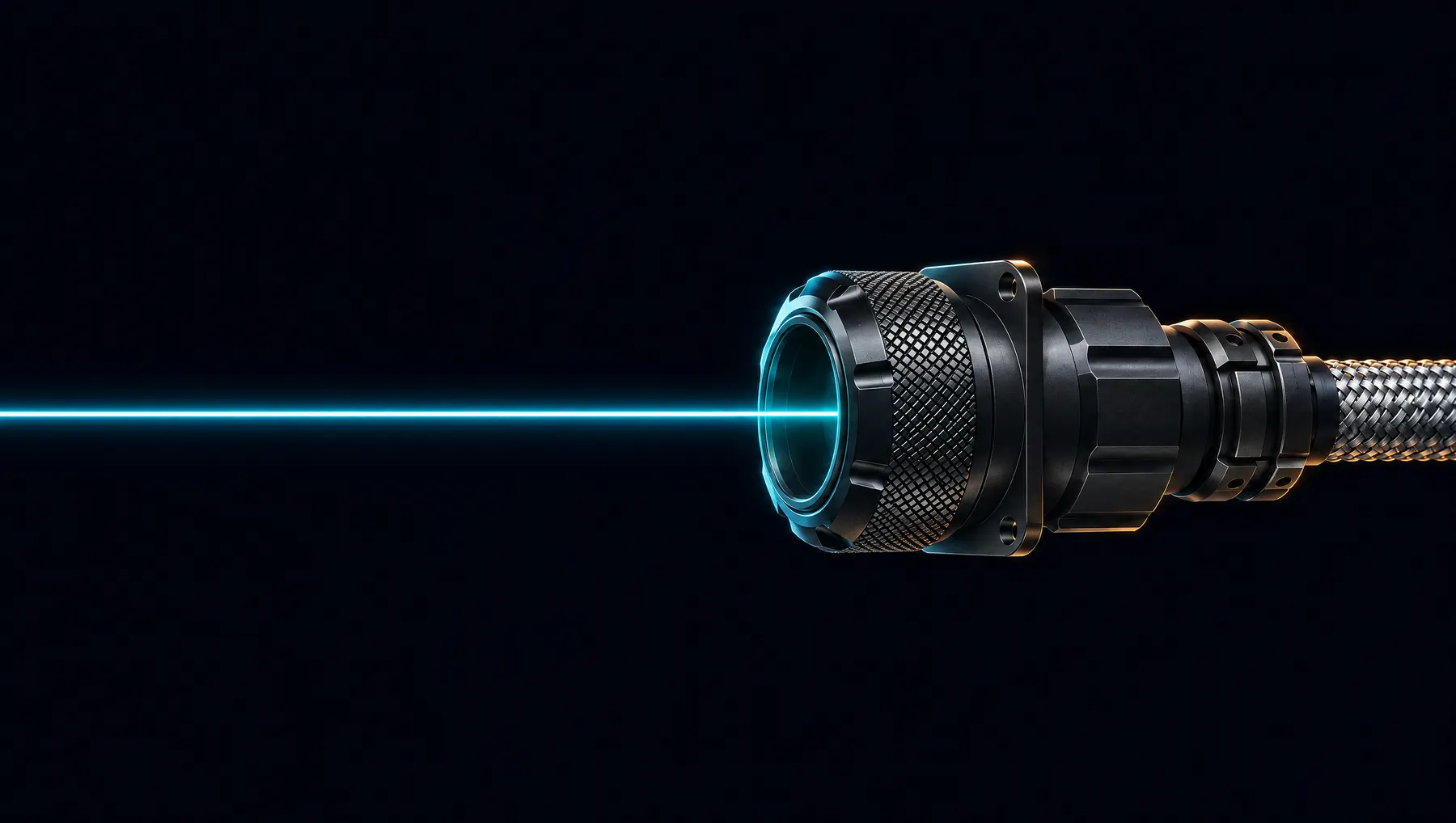
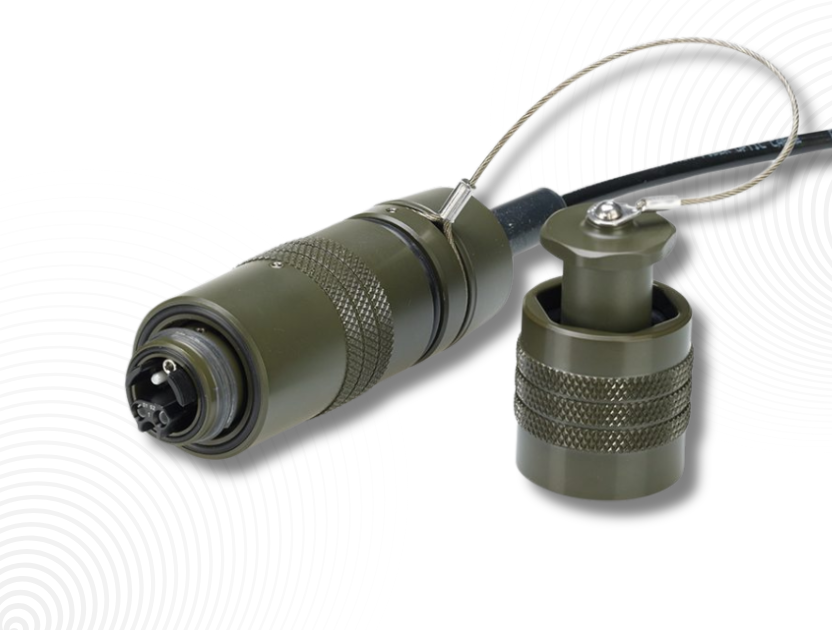
SMPTE 304M defines the matching hybrid connector, most often made in the LEMO 3K.93C format and compatible equivalents. Each connector carries the two fiber contacts and the copper contacts in one shell, with a latching coupling. The fiber contacts are physical contact, sitting near the face of the connector, which is why caps must stay on and both halves must be cleaned before every connection.
Japanese camera systems often use the ARIB standard instead. ARIB and SMPTE 304M connectors do not intermate, so check your system before ordering cables or adaptors.
What limits the length
The fibers could run for kilometers without trouble. The limit comes from the copper: the longer the cable, the more voltage is lost on the power conductors, until the camera no longer receives enough to run. Each camera and CCU maker publishes its own maximum, which depends on the camera’s power draw and the CCU’s output. Typical limits range from several hundred meters to a few kilometers. Beyond that, systems use a local power supply at the camera and fiber-only links.
Looking after hybrid camera cables
- Cap every connector the moment it is unplugged, and keep caps clean.
- Clean before every mate, using the right cleaning tool for the fiber contacts.
- Inspect end-faces with a scope when a link shows high loss or errors.
- Coil carefully and avoid tight bends at the connector boot.
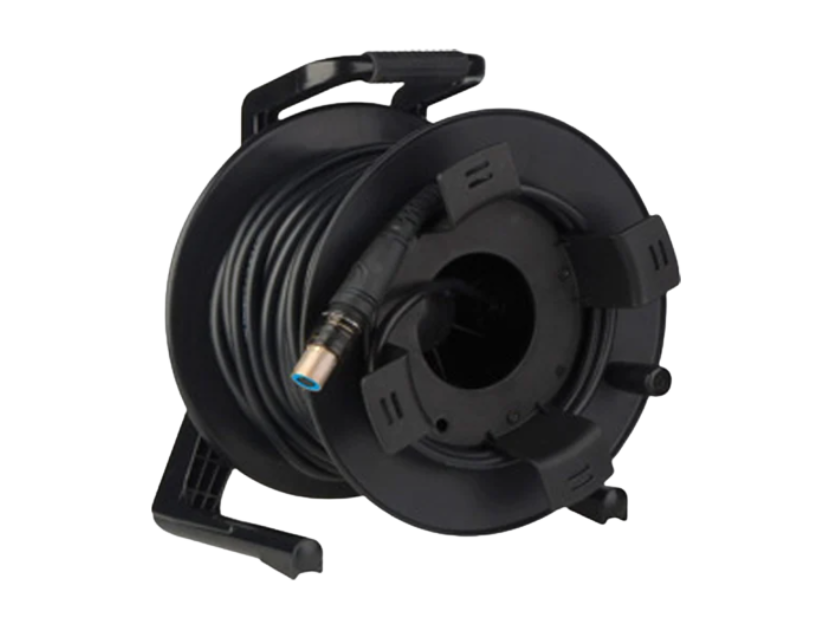
- Use drums for long cables, and keep a spare length on every show.
- Test after repairs for fiber loss and copper continuity.
Specifying a hybrid camera cable
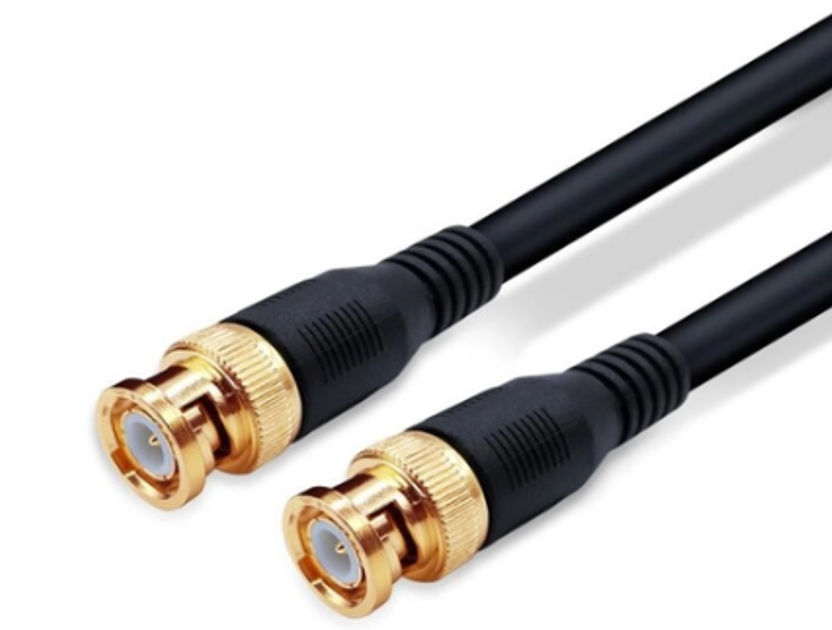
Give the length, the connector format (SMPTE 304M or ARIB), the jacket (studio or tactical), and whether you need a drum, panel receptacles or extension adaptors. For SDI runs that do not need camera power, see our SDI cable buyer’s guide.
From Telespace
We build SMPTE 311M hybrid camera cables to length in our Mumbai workshop, test fiber loss and copper continuity on every cable, and supply them on drums or with panel receptacles. Tell us your camera system and lengths for a quote.